
Core Zones
The Academic District sits at the center, surrounded by magic-permitted residential areas, semi-permitted areas, and the outer barrier zone.
Central Arcanopolis · Eureka
The arcanopolis for North America and Greenland, developed around Eureka Academy of Magic.
Evolving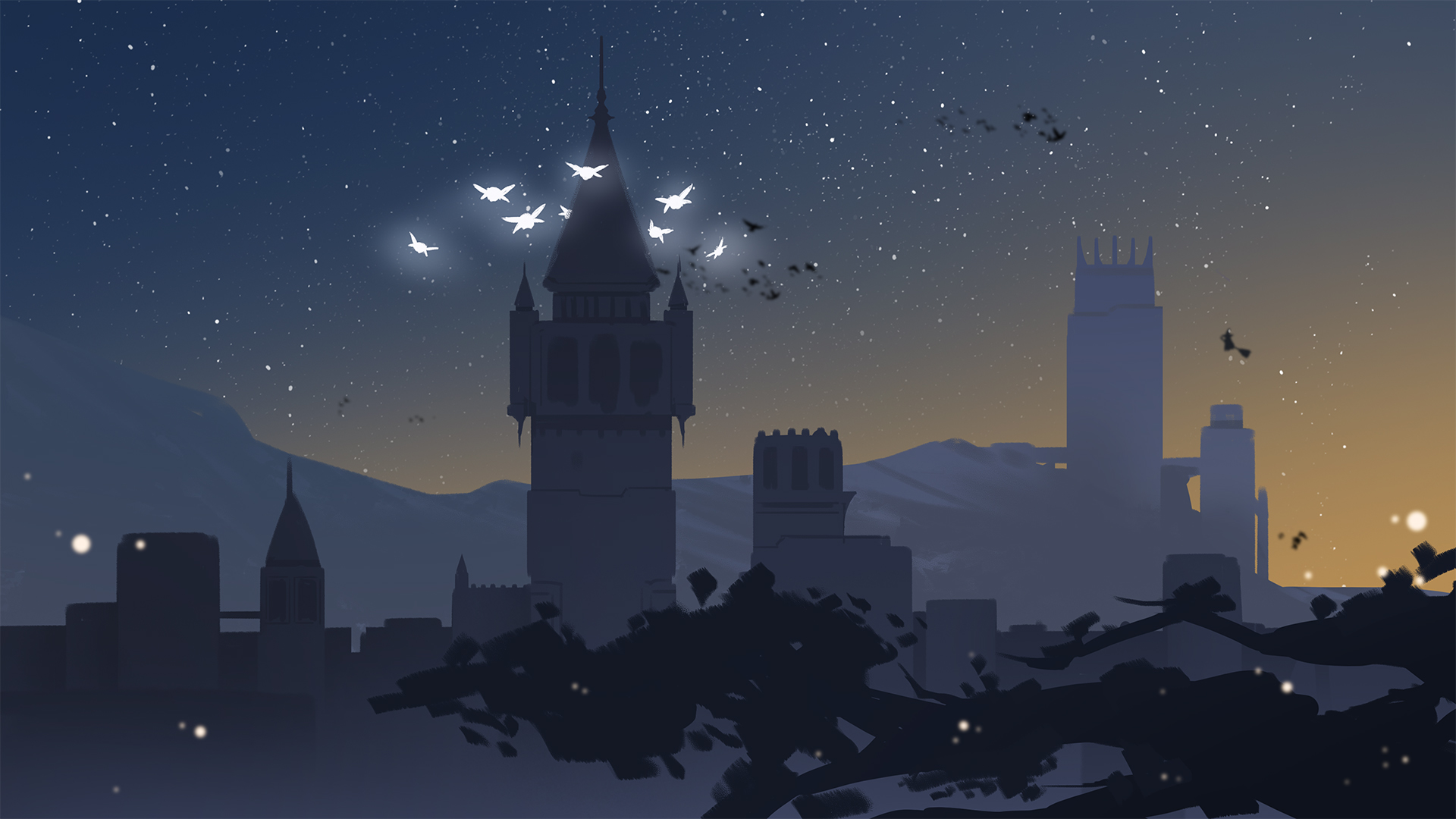
Core Zones
The Academic District sits at the center, surrounded by magic-permitted residential areas, semi-permitted areas, and the outer barrier zone.
Education Hub
Eureka Academy is the city’s only and highest magical institution, using credit tiers and advanced specialization tracks.
Daily Systems
Currency, healthcare, transportation, communications, and festivals shape everyday life in the city.
Magical freedom decreases from the Academic District toward the barrier zone. Non-humanoid residents need shapeshifting certification for areas closer to the human world.
Students begin with general studies, then enter tracks such as Sorcery or Witchcraft based on aptitude assessments.
Magictopia Festa is the city’s major public celebration, featuring the Spring Ball, Spirit Roaming, Parade, and Grand Sorcerers’ Banquet.
The Arcanum Syndicate handles administration, research, investigation, demographics, and public relations. Race identity is usually judged by appearance and family context.
Full Notes
Eureka's city, academy, daily life, and governance records. Arcanopolis Eureka is a city enveloped by magical barriers, designed to accommodate diverse races for both living and magical research purposes. As an independent zone, it remains completely unknown to ordinary humans. The citizenry consists of magic school students, faculty (including staff), Arcanum Syndicate officials, and general residents.
Located in North America (exact coordinates classified), this city developed around the Eureka Academy of Magic—the sole and most prestigious magical institution within its boundaries.
Academic District: The central zone housing Eureka Academy. Magic usage is least restricted here, reserved solely for education and practical training.
Magic-Permitted Residential Area: Adjacent to the Academic District, this zone features comprehensive living/entertainment facilities with high magical freedom. Non-humanoid races may retain natural forms.
Semi-Permitted Residential Area: A mixed human/other-race community encircling the Magic-Permitted zone, resembling a small city with regulated magic use. Non-student humans require Arcanum Syndicate approval and permits to enter/reside here. Non-humanoids must pass at least Basic Shapeshifting Certification for access.
Barrier Zone: The strictly controlled perimeter bordering the human world. Most residents are unaware Muggles. All magic is prohibited, as is any magical disclosure. Entry/exit demands Syndicate authorization, with non-humanoids requiring Advanced Shapeshifting Certification.
Note: Outside the Academic District, most magic is forbidden for students. Workplace allowances follow “Arcanum Syndicate Regulation #103: Occupation-Specific Magic Permissions.”
Open to all self-aware races. Admission criteria vary by racial traits, baseline abilities, and lifespans (See Appendix 2: Racial Requirements).
Baseline Requirement: Capacity for elementary aether perception and manipulation. Applicants meeting standards may apply by March 1 (Fall term) or November 1 (Winter term). Accepted students receive official notices via contracted pixies—only registration with one’s assigned pixie at the Academy Library validates enrollment. Pixie loss/death nullifies admission.
Qualified humans in the mundane world receive proactive invitations (See Appendix 1: Human Admission Protocols).
Replaces grade levels with credit tiers.
All students begin with General Magic Studies. Before completing these credits, they undergo aptitude assessments to determine specialized advancement paths. While most qualify for one specialization, dual-qualified students may sequentially pursue multiple certifications.
Graduation Requirements: Students must complete all compulsory courses, achieve a specified total credit requirement (the Academy sets customized credit targets and special course requirements based on each student’s foundational skills, racial characteristics, and lifespan - students may check their academic progress at any time), and obtain professional certification in their chosen advanced specialization.
Students who complete preparatory courses offered by the Academy or other institutions prior to enrollment may receive partial credit exemptions.
Students who meet graduation requirements are collectively referred to as Magic Practitioners and may choose from the following development paths:
Corresponding Profession: Sorcerer/Sorceress Department Characteristics: The curriculum emphasizes practical application, focusing on the utilization of various incantations and spells to influence reality through different fundamental magical formulations. Students learn to convert aether manipulation into personal capabilities, training concentrated willpower for spellcasting, with particular emphasis on developing energy control abilities. The pursuit of advanced ritual magic mastery requires students to demonstrate innate talent in fundamental magical control.
Corresponding Profession: Wizard/Witch Department Characteristics: The curriculum leans toward metaphysical studies, emphasizing magical principles and activities that aren’t purely spell-based, where incantations serve only auxiliary functions. Students learn to apply aether manipulation in spiritual domains, training their connection to primal magic, with focus on developing practical utilization of extensive magical knowledge. The pursuit of profound magical enlightenment requires students to exhibit innate talent in energy resonance.
Is there a unified or universal currency? Or do different arcanopolises have their own currencies? What manages currency circulation? Can it be exchanged with human currencies? What are the currency situations between different races? Are there banks or bank-like systems?
In modern times, to facilitate transactions, arcanopolises generally adopt the currency of the nearest human society, with specific tax rates varying by location. For example, Arcanopolis Eureka uses USD and CAD with a 15% tax rate, while European magic zones use EUR. Chinese magic regions impose no additional consumption taxes.
Additionally, certain magical transactions require an ancient magical currency called [Aether Tokens].
Aether Tokens are magical units that use aether as a medium for measuring value. Subjectively intangible, they appear as floating luminescent particles to those who can perceive aether. Storage and transactions occur within personal aetheric fields, meaning those with weak aether manipulation abilities cannot handle them. (In simpler terms: magic Bitcoin/gacha currency).
As unique, non-replicable assets existing only in aetheric fields, Aether Tokens cannot be stored in banks.
Due to currency commonality with human societies, many arcanopolises cooperate with major banks for services like savings accounts, credit cards, and financial management.
What are the commonly used transportation methods? How do they operate? Are there traffic regulations/traffic departments? Do individuals own personal vehicles? If yes, what are they like? How is long-distance communication conducted? Are there specific items or spells? Or is postal service used? What is the status of the freight system (e.g., express delivery/goods)?
How does emergency medical treatment work? The healthcare system is nearly identical to ordinary North American human society (basically general practitioners can handle most cases, but appointments are hard to get, minor illnesses are covered by insurance, hospital outpatient services have long queues, emergency care is extremely expensive without insurance, etc.). The difference from ordinary human society is that in Arcanopolises, both family doctors and hospitals are divided into two major categories: magic-related and non-magic-related. Magic-related hospitals and family doctors will use spells or healing magic they specialize in for diagnosis and treatment. It’s important to note that magic cannot cure some major diseases, specifically manifested in: genetic diseases, congenital diseases, diseases caused by internal pathological changes (e.g., cancer - magic can alleviate some suffering for cancer patients but cannot cure it), and some irreversible human conditions (e.g., bone fractures - magic can accelerate fracture healing and reduce patient trauma, but cannot directly restore broken bones to their original intact state). For psychological aspects, it only plays an auxiliary therapeutic role. Common external injuries such as abrasions, cuts, and subcutaneous injuries caused by impacts - these minor injuries can be healed with magic. In other words, magic plays a significant role in auxiliary treatment, but cannot truly cure any disease. All magical treatments require obtaining relevant licenses, because magic can not only heal but also cause deeper harm if used carelessly. Therefore, even for minor skin wounds, those without medical licenses cannot casually use magic for treatment or rescue activities.
Magic Day (date) and Tech Day (date): Commemorate the reconciliation and merger of two academies, featuring magic-themed and magic-free competitions respectively.
The most grandly celebrated holiday in the magical world, observed not only in Arcanopolis Eureka but across the globe. This ancient traditional festival sees arcanopolises and magical regions holding celebrations tailored to local customs, with magic usage restrictions temporarily lifted (though strictly regulated by local branches of the Arcanum Syndicate, requiring significant manpower and resources for safety maintenance). Significance: Celebrates the arrival of spring and the revival of all living things, while conveying the vision of harmonious coexistence between humans and magical beings (elementals, ancient deities, magical creatures). Timing: Begins on the first Monday of March (human calendar), lasting an entire week. The entire magical world observes a holiday during this period (except for essential public institutions). In North America, the festival concludes on the Sunday when daylight saving time begins.
[The following primarily describes the celebration culture and activities in Arcanopolis Eureka] **Main events: **:Spring Ball (outdoor), Spirit Roaming, Parade, Grand Sorcerers’ Banquet
Hosted by various institutions at different locations during the festival, typically held outdoors in the evening. Unlike Christmas balls, attendees often wear brightly colored formal attire adorned with tulle and feather accessories, accompanied by lively, cheerful music. Some venues serve self-serve fruit wines or light snacks, while others may invite flower and leaf sprites to scatter petals and young leaves in the air to enhance the atmosphere.
At midnight on the first day of the festival, senior sorcerers dispatched by the Arcanum Syndicate and school authorities perform rituals to summon various magical beings. These beings may include spiritually attuned magical animals like divine stags or birds from deep forests, elementals born from the essence of nature, or supernatural creatures from myths and legends such as rainbow ravens. There is even a chance to summon echoes of deceased famous figures or great sorcerers (e.g., Qin Shi Huang and Aristotle).
The summoned beings exist in semi-spiritual form and can pass through physical structures and obstacles in the human world. However, they can choose to materialize at will. For instance, when a gentle divine stag is touched, one can usually feel the texture of its fur, but if it dislikes the person attempting contact, their hand will simply pass through the stag’s form as if through air.
To prevent chaos, the Arcanum Syndicate and school authorities typically establish force fields in designated areas, restricting the summoned beings’ movements within these boundaries.
Notably, in Eureka Academy, students often place delicacies or novel items in their dormitories to entice the beings to linger longer. Some even compile “Manuals of Magical Beings’ Preferences” based on past experiences, hoping to cater to specific creatures’ tastes. However, these beings’ preferences are not fixed, so successful interactions still depend partly on luck.
Since the festival’s theme is harmony, citizens must maintain a friendly and respectful attitude toward the beings, even showing a degree of reverence. Any inappropriate behavior may result in arrest by the Arcanum Syndicate.
Like most parades, this event involves closing the city’s main streets for a procession of brightly decorated floats and magical performers. The more jubilant and lively the atmosphere along the route, the stronger the magical reactions, producing spectacular effects akin to fireworks.
Originally an evolution of witch covens, this gathering expanded to include male wizards and sorcerers as their numbers grew. The event now serves as a meeting place for all powerful sorcerers. Those with unparalleled achievements in magic, outstanding contributions, or special statuses—whether due to prestige or extraordinary magical prowess—are honored with the title “Grand Sorcerer”. Remarkably, unlike human high society, this banquet has not devolved into a venue for vanity and materialism but remains a sacred gathering for genuine intellectual exchange.
The banquet is typically held late at night on a Friday during the festival, with locations varying yearly (often abandoned castles or deep forests). The venue features long tables, candles, and lavish feasts where Grand Sorcerers share their experiences and insights from the past year. In recent years, with advancements in academia, discussions have increasingly focused on specialized magical topics.
Generally, the next year’s location and host are decided at the end of each banquet, though disagreements are rare—it resembles friends taking turns hosting. Other Grand Sorcerers receive unique invitations before the festival, with the invitation’s form varying annually. In principle, the banquet prohibits accompanying family members or spectators, though exceptions occasionally occur (e.g., non-sorcerers receiving special invitations, handled on a case-by-case basis).
The Arcanum Syndicate functions as the magical world’s civil service, maintaining balance between both worlds. Members must meet certain magical proficiency standards.
As a neutral, borderless organization, it theoretically doesn’t interfere with regional development, operating on magical principles and peace. However, it has a UN-like headquarters coordinating global branches.
Its authority derives from the “Aether Concordat”.
The floating headquarters’ location shifts every 10–20 human years within a barrier-protected tower.
Key divisions include:
Do interracial conflicts exist? Have any major incidents/violent events occurred as a result? During what period did they begin and what were the causes/processes/outcomes? What are the attitudes toward mixed-race individuals? What are the characteristic traits of each race? (e.g. appearance/endurance/stability/aggression/intelligence/physical strength/appearance/personality etc.) What are the reproduction and genetic situations? How do physical abilities/capabilities manifest? Are there class/status divisions within a race? If so, how are they divided?
Races exhibit great diversity and can intermarry. Identification documents will display human-age equivalents calculated by the Arcanum Syndicate based on actual age. Generally, a person’s race is determined primarily by their most prominent physical characteristics, though family background may also be considered in special cases [For example, Stolik’s mother is a dragon and father is a naga, but his appearance is humanoid with dragon horns and tail. Although he can manifest a snake tail, it’s not his primary form. Additionally, his parents had a “fourth love” relationship with the father marrying into the mother’s clan, so Stolich is classified as a dragon]. [Another example would be a child born from a pureblood human and elf pairing who has elven ears but resembles humans in height and facial features, without exhibiting elven racial habits - such a case would be classified as human.]
Regarding age and lifespan theories: After countless generations of interbreeding among arcanopolis residents, lifespan differences no longer clearly reflect racial averages. This is why the Arcanum Syndicate converts ages to human equivalents (a standard is needed to determine whether someone is “old”). Only pureblood individuals exhibit significant lifespan variations between long-lived and short-lived species.
Except for some conservative races or those with complex family systems that emphasize bloodline purity (where cross-race lovers might face Romeo-and-Juliet scenarios requiring elopement, suicide, or family disownment), modern society rarely practices extreme measures like honor killings. Most cases simply result in lack of family recognition.
Regarding humans, since most of the human natives in Arcanopolises migrated in from ancient times, and because human lifespans were originally very short, all naturally deceased native humans have long since passed away. Currently, the human residents in Arcanopolises are either:Mixed-blood individuals between humans and other races (though exhibiting human characteristics externally), or Those who entered the Arcanopolis to settle at a later period (for example, having received admission invitations to magic schools and choosing to remain in the Arcanopolis after graduation).
For nature-born races like sky sprites and ocean sprites: While they can produce offspring with other races, they cannot reproduce within their own race. Any mixed offspring will predominantly exhibit traits of the other parent’s race.
Within the same race, couples who want children typically choose adoption. Alternatively, if the love between two individuals is strong enough, they may make a wish to nature, which might “gift” them a child (Note: This is exceptionally rare, occurring maybe once per century). However, such gifted children share no genetic or blood relation with the parents.
Known characteristics:
Merfolk racial traits include human upper bodies and fish tails, with no natural ability to transform between legs and tails. However, as more merfolk families have migrated from deep seas to shallow waters, rivers, and even freshwater areas over time, a custom has developed where families teach children basic transformation spells during their growth period, allowing them to develop legs and learn to walk during infancy. Since transformation spells require certain magical foundations, this training typically begins at human-age 2-3 years, meaning merfolk children remain in fish-tail form until at least age 2.
Prolonged time on land leads to severe dehydration, requiring regular hydration through drinking, bathing, or applying moisturizing treatments.
Due to their deep-sea biology, merfolk eyes emit faint fluorescence at night, and female merfolk have glowing strands in their hair that are particularly visible in darkness.
Since ancient times, Ocean Sprites have inhabited the deep sea as intelligent beings tasked with protecting marine peace and natural order. They can breathe underwater and communicate with various sea creatures. Their appearance resembles ordinary humans but with distinctive round, wide yet pointed ears. Adults can learn to mimic one marine creature’s form. Ancient Ocean Sprites lived in communal settlements, but with technological progress, their habitats have expanded to various deep water areas, with some even adapting to modern human society on land. Due to ecological destruction and pollution, ocean-dwelling sprites have retreated to deeper trenches, making them inaccessible to most.
Ocean Sprites are nature’s gift to the sea, born like pearls from giant deep-sea shells without parents or blood relations. They originally lived in communities organized by age groups, but as their numbers declined, these evolved into family-based settlements resembling small towns, with deep bonds resembling kinship among members.
Female naming conventions: Communities share surname suffixes that may indicate location, status, or natural environment. Names typically follow a “monosyllable or repeated monosyllable + suffix” pattern. For example, with “-pphia” as a suffix, “Ne” and “Re” become Nepphia and Repphia.
As an ancient race dating back to prehistoric times, dragons have developed into prominent families over generations. Most belong to wealthy, influential lineages who prefer to live discreetly while managing vast business empires.
All dragons are intersex, possessing both sets of reproductive organs. Dragon offspring show no distinct gender characteristics during childhood. At a certain age, they choose their apparent gender (traditional biological sex presentation), while retaining both reproductive systems (thus male dragons can also bear children). After selecting their gender, their appearance develops accordingly in an irreversible process.
While physical gender presentation becomes fixed after selection, dragons can voluntarily modulate their voices between masculine and feminine ranges (some male dragons may use feminine voices during their voice-change period due to embarrassment). There are also many cases of feminine-voiced males and masculine-voiced females.
Forest-dwelling nagas have human upper bodies and snake tails, forming matriarchal societies led by females. A typical family consists of one female with multiple males, though some modern couples choose monogamy due to interracial influences. Reproduction involves females fertilizing eggs that males then carry, with males typically responsible for child-rearing.
Similar to Ocean Sprites, Sky Sprites are nature-born intelligent beings tasked with maintaining sky realm peace and natural balance (such as repairing ozone layers).
Sky Sprites are born from clouds connected to rainbows’ ends, but their creation requires strict conditions, making them exceptionally rare.
Their racial traits include transparent bodies for camouflage, using light refraction to conceal themselves in the sky. They have translucent wings and can transform into clouds (size corresponds to physical form). They reside within cloud masses and maintain the skies.
Are there established standards? Is there an authoritative body for evaluation? How does progression work?
Aether: In Muggle society, “aether” exists as a hypothetical substance, but in the magical world, aether is a real magical medium present in the air. Air is a mixture of various dry gases, while aether is an extremely small component of this mixture. It is not a gas, has no physical form, and does not react with any substance. Residents and creatures of the magical world can all perceive the existence of aether - this is the most fundamental difference from ordinary creatures. For example, the difference between magical plants and ordinary plants is that ordinary plants only perform photosynthesis, while magical plants can use aether as a medium to conduct photosynthesis. On this basis, magical plants will have some characteristics that ordinary plants don’t possess, and may even undergo mutation.
Forbidden magic typically violates ethics, laws, or has low controllability. Death curses, human cloning, and alchemy are universally banned due to irreversible aether structure damage.