
Regional Role
Located in the eastern waters of Eureka, Thalassora extends from land into shallow-sea settlements and serves as a major route for marine residents.
Satellite City · Eastern Eureka Waters
A coastal satellite city east of Eureka and a crossroads for marine cultures.
Evolving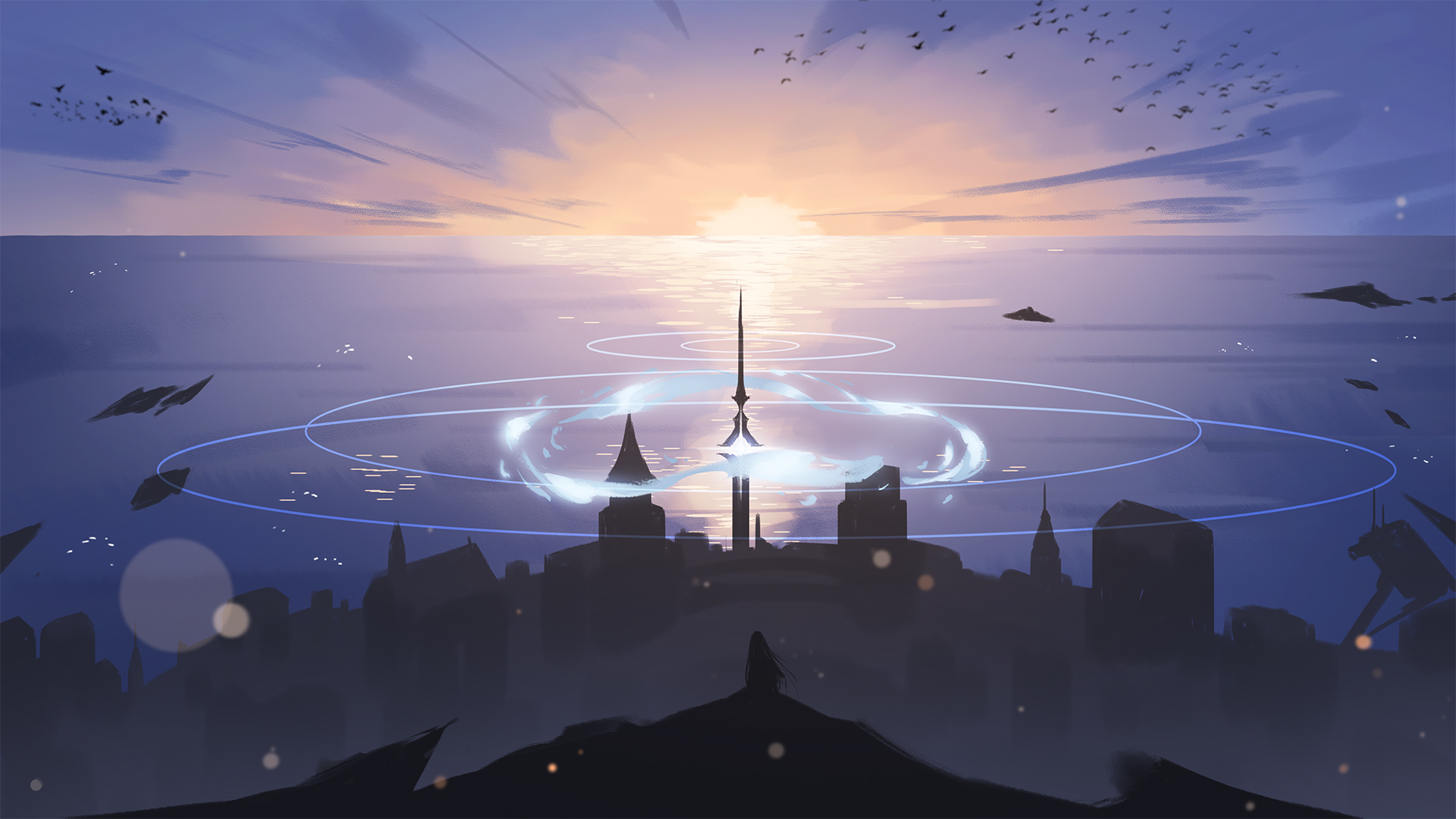
Regional Role
Located in the eastern waters of Eureka, Thalassora extends from land into shallow-sea settlements and serves as a major route for marine residents.
Atmosphere
Open, diverse, and youthful, the town blends traditional magic, marine ecological wisdom, and limited modern technology.
Primary Functions
It supports marine magic research, deep-sea trade, aquatic residents adapting to land, and cultural exchange.
The core lies on land, while jurisdiction extends into shallow and deep-water areas. Water elevators, floating lamps, and bubble zones help multiple races live together.
Aquarama Square, Mareflux Market, Spindrift Cove, Corallumina Passage, Beach of Douxvent, and Tidalide Center form the town’s public activity network.
Eureka Academy maintains research centers here, making Thalassora a front line for marine magic, ecology, and trade research.
Residents come from aquatic traditions but have developed education, food culture, and community support systems for life on land.
Full Notes
Thalassora's region, landmarks, and resident-life records. The English name “Thalassora” derives from the Greek “thalass” (sea) combined with the Latin suffix “ora” (meaning “boundary/gateway” or “golden hour”), echoing the tidal rhythms of day-night alternation. In the semantic understanding of magical world residents, it signifies “the breathing rhythm of sea and land,” while literally translating to “gateway to the sea.”
Located in the eastern waters of Arcanopolis Eureka, Thalassora serves as a crucial connecting hub between the magical city and deep-sea races. Originally just an ordinary settlement where aquatic races adapted to terrestrial life, it has gradually evolved into a coastal town blending traditional magic, multicultural elements, and limited modern technological influences alongside Eureka’s development.
This is the convergence point where terrestrial magical civilization collides with deep-sea racial cultures. With its large population of youth enthusiastic about exploring the fusion of traditional and modern ideas, Thalassora’s residents include both traditional aquatic races still adapting to land life and scholars from Arcanopolis, collectively shaping an open, diverse, and vibrant urban atmosphere.
Despite its high degree of modernization, unlike traditional deep-sea settlements, this coastal town maintains distinctive maritime characteristics, creating a place that is both open and retains an air of mystery.
The terrestrial portion lies in southeastern Eureka, bounded by the Argentvia River and extending into coastal waters, with jurisdiction including villages and small towns beneath shallow sea areas. Featuring a humid temperate continental climate with warm, humid summers and cold, snowy winters, the region experiences prolonged winters due to Labrador Current influences. However, thanks to aquatic races’ magical maintenance, coastal waters never freeze despite heavy snowfall and extreme cold.
Thalassora is built on coastal land extending eastward into warm coral seas, surrounded by magic-barrier-protected reefs that stabilize currents within city waters, making it suitable for diverse races.
The urban core and major residential areas occupy terrestrial zones, while numerous small towns and villages dot sunlit shallow-sea islands where underwater architecture creates unique light-shadow effects. Deep-water zones extend to seabed areas housing Eureka’s underwater research stations and secret passages to deeper seas. The urban center’s terrestrial section contains Eureka’s scientific research outpost with multiple institutes and laboratory branches exploring marine magic-technology integration.
While maintaining traditional magical lifestyles, the city also benefits from Eureka’s technological assistance, featuring magical water elevators, floating lamps, and specialized bubble zones in shallow waters enabling land-dwellers’ underwater mobility.
As a satellite city, Thalassora provides marine residents access to Arcanopolis while serving as Eureka’s core zone for marine magic research, trade, and cultural exchange. Eureka Academy maintains multiple research centers here where marine races study magic while Eureka’s mages and scholars research marine cultures.
Blending technology, magic, and marine ecological wisdom, Thalassora both disseminates Arcanopolis’ influence to deep-sea races and provides experimental grounds for marine ecosystem management. Eureka established a non-public Marine Ecology Research Institute here, utilizing modern technology to study marine resources, though traditional magic and natural wisdom remain dominant with relatively low technology integration.
Location
The most bustling area in the coastal town, built around the central coastal zone with commercial and public facilities radiating inland from this elevated square offering coastline views while maintaining some distance from open waters.
Core Function
Centered around the ancient magical device “Tidal Resonance Ring” suspended above flowing magical waters, this square’s upgraded apparatus maintains ecological balance, predicts major weather changes, and alerts residents about abnormal marine magic fluctuations through glowing runes. Eureka regularly dispatches specialists for maintenance while scholars study marine magic-aether flow correlations.
Researchers believe the original device may originate from ancient deep-sea civilizations brought ashore during migrations, with many mysteries remaining. Originally interpretable only by certain marine races, modified runes now project publicly understandable information.
Tourist Highlights
Beyond being the urban heart, Aquarama Square showcases magical light-art. Evening “Tidal Light Shows” transform the sky into starry marine vistas called “Ocean Memories,” attracting crowds for academic demonstrations and artistic performances.
This multicultural shopping paradise at the town’s coastal edge features floating reef-like stalls selling marine ingredients, magical materials, rare creature products, and handicrafts. Eureka students frequent the market for unique alchemical materials while deep-sea vendors display exquisite crystal carvings and coral magical implements, making it both commercial hub and cultural exchange window.
Spindrift Cove serves as the location for Eureka’s Marine Ecology Research Institute, equipped with modern scientific instruments and research facilities. Here, specialized research submarines designed for oceanic exploration are docked, making it a crucial base for studying deep-sea ecosystems and investigating anomalous spatial phenomena. Despite its advanced equipment, the institute remains closed to the public, accessible only to authorized researchers and academic personnel. Even faculty and students from Eureka Academy of Magic must present special permits or formal applications to enter. Eureka’s magical biologists, nautical mages, and alchemical researchers frequently depart from this facility to collect deep-sea samples or explore uncharted ruins. Additionally, many Eureka Academy students conduct underwater training and magical creature observation here as part of their practical studies.
A fast-current passage that periodically forms near the coastline, with no fixed location. Constructed from specific ocean currents, it provides access to deeper marine settlements inhabited by various aquatic races. While alternative routes exist, this passage is maintained for safer and more efficient short-distance travel. Daily upkeep is managed by sea sprites, who also provide protective enchantments derived from oceanic magic.
To ensure security, cover maintenance costs, and regulate usage, travelers must pay a toll of 1 to 10 “Tidepattern Coins” embedded with luminescent coral fragments. The exact amount depends on the distance traveled. These coins can be exchanged at official stalls in Mareflux Market, where accepted payment includes standard currency or magical materials—all proceeds directly fund Eureka Academy’s research initiatives and the sea sprites’ maintenance efforts.
For frequent travelers commuting between Thalassora’s terrestrial zones and other marine territories, discounted weekly and monthly passes are available. Large groups of deep-sea residents visiting the city often prefer this passage for its convenience and safety.
Given that Thalassora is primarily inhabited by marine-adapted races—and thanks to magically enhanced cleanliness—the coastal sands here are exceptionally fine and soft, while the waters remain crystal-clear. This makes the beach a top choice for relaxation among local residents and a favored vacation spot for Eureka citizens. The shoreline is lined with sun loungers and cushioned seating, where visitors can enjoy distinctive local cuisine while taking in pristine ocean views. For those seeking adventure, guided shallow-water diving experiences are available, supervised by professional marine residents.
As Thalassora’s primary land transportation hub, the Tidalide Center connects the city to Arcanopolis Eureka and other terrestrial towns. It integrates both a train station and a bus terminal.
Train Services: Exclusively operates a direct rail line to and from Eureka, with a one-way trip lasting 3–4 hours. Three daily departures are available (morning, midday, and evening), with no overnight services. Bus Services: Offers routes to Eureka, neighboring towns, and resort areas, with schedules posted monthly on the terminal’s notice boards. Though functionally a standard transit hub, the Tidalide Center stands out for its marine-inspired architectural design, including entrances adorned with color-shifting water curtains. This unique aesthetic has made it a popular photo spot for tourists.
Originally settled by aquatic races drawn to terrestrial living, most of Thalassora’s residents have adapted to land-based life while retaining their marine heritage. The city features numerous hydration stations and mutual aid societies to assist newly arrived aquatic individuals in acclimating.
Several small academies provide foundational education in traditional magic and basic shapeshifting to help younger generations integrate into human society. Influenced by Eureka, visiting professors occasionally hold public lectures, and outstanding students may participate in short-term exchange programs at Eureka Academy.
Research institutions regularly host seminars on marine magic and ecological wisdom, revitalizing traditional practices with new insights.
Blending Eureka’s urban energy with deep-sea traditions, Thalassora thrives on the dynamic interplay between youthful innovation and ancient magical culture, ensuring the city remains vibrant and progressive.
Renowned for its fresh seafood, Thalassora’s cuisine combines marine and land-sourced ingredients into unique delicacies. A standout product is “Fluorescent Coral Salt”—a specialty seasoning sold exclusively at Mareflux Market, used to enhance sashimi or create crispy “Tidal Layered Pastries.”
While most residents use modern utensils, specialty restaurants still offer traditional aquatic dining ware, such as heat-retaining stone plates and glowing coral cutlery, preserving the city’s maritime roots.